RELEVANT RESEARCH
Evidence That Moves Biopsy Forward
A Variable Length Biopsy Device Designed for Improved Prostate Cancer Detection vs the Standard Biopsy Device: Pathological Comparisons and Needle Length Requirements for Men Undergoing Transperineal Biopsy
JU Open Plus (2025)
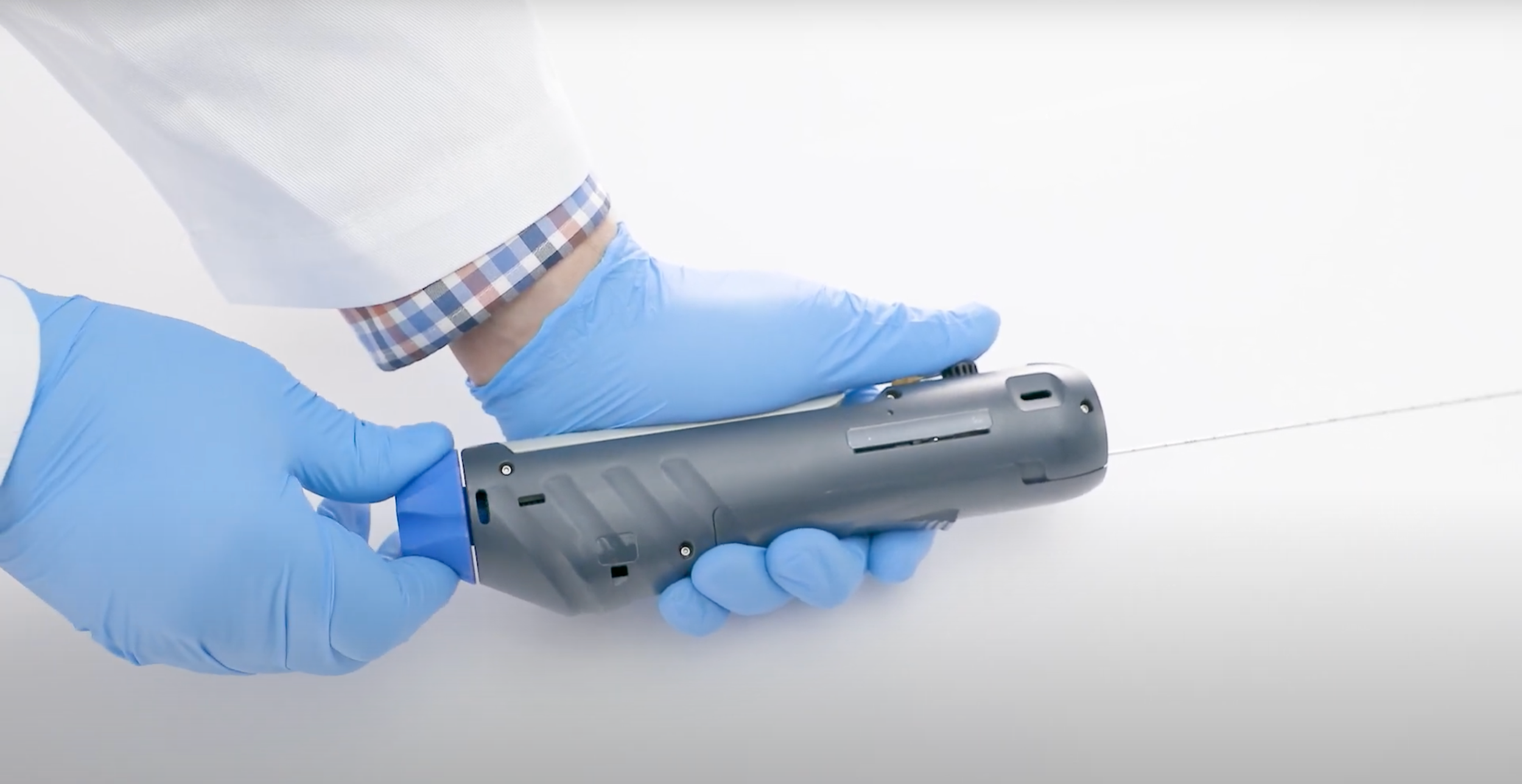
This study evaluates a biopsy system capable of collecting variable-length specimens ranging from 1.5 to 5.5 cm and compares it with standard fixed-length devices. The authors report increased tissue yield, improved specimen integrity, and show that the majority of men undergoing biopsy require sampling lengths that exceed those provided by conventional needles. Measurements of prostate apex-to-base dimensions further demonstrate the mismatch between prostate anatomy and standard biopsy needle design.

Concordance Between Biopsy and Radical Prostatectomy Pathology in the Era of Targeted Biopsy: A Systematic Review and Meta-analysis
European Association of Urology (2019)
This systematic review and meta-analysis shows that MRI-targeted biopsy reduces the rate of upgrading at radical prostatectomy compared with systematic biopsy alone, but substantial discordance exists between biopsy and prostatectomy results. The authors demonstrate that under-sampling and limited tissue acquisition remain major contributors to grading error, even in targeted biopsy workflows. These findings indicate that while MRI improves lesion localization, it does not fully overcome the limitations imposed by biopsy specimen length and tissue volume.

Deflection Analysis of Different Needle Designs for Prostate Biopsy and Focal Therapy
Technology in Cancer Research & Treatment (2017)
This engineering study evaluates needle deflection during prostate biopsy and focal therapy procedures, demonstrating that conventional needle designs exhibit measurable deviation from the intended trajectory. The authors show that deflection increases with tissue resistance and needle length, introducing targeting error even under image guidance. These findings establish needle mechanics as an underrecognized contributor to sampling error and supports the need for biopsy devices designed to minimize deflection while maintaining specimen integrity.

Variability in Outcomes for Patients with Intermediate-risk Prostate Cancer (Gleason Score 7, ISUP Grade Groups 2–3) and Implications for Risk Stratification: A Systematic Review
European Association of Urology (2016)
This systematic review examines clinical outcome heterogeneity among men with intermediate-risk prostate cancer, specifically Gleason score 7 (ISUP Grade Groups 2–3). The authors report substantial variability in progression, metastasis, and treatment response, highlighting limitations in current risk stratification. The findings underscore how small differences in grade and volume assessment at biopsy can meaningfully alter prognosis, reinforcing the importance of accurate, well-sampled biopsy specimens for reliable classification of intermediate-risk disease.

The Reliability of Histological Grade in Breast Cancer Core Needle Biopsies Depends on Biopsy Size: A Comparative Study with Subsequent Surgical Excisions
Histopathology (2016)
Although focused on breast cancer, this study demonstrates a general principle applicable to solid tumors. Larger biopsy specimens were more likely to reflect final surgical pathology, while smaller samples frequently underestimated disease severity. The findings support the broader conclusion that specimen size may be a central determinant of grading reliability across organ systems.

Quality Assurance in Prostate Biopsy Sampling, Processing, and Reporting: A New Pathologic Paradigm for Prostate Cancer Diagnosis
Imaging and Focal Therapy of Early Prostate Cancer (2013)
This manuscript reframes prostate biopsy as a quality-controlled diagnostic process rather than a simple sampling event. The authors describe how variability in tissue acquisition directly affects downstream interpretation, emphasizing that inconsistent specimen length and integrity introduce diagnostic uncertainty before pathology review even begins. This highlights the importance of standardizing biopsy quality to improve reproducibility and clinical diagnostic confidence.

Core Length in Prostate Biopsy: Size Matters
The Journal of Urology (2012)
This study demonstrates a clear relationship between biopsy core length and prostate cancer detection rates. Shorter cores were associated with missed disease and underestimation of tumor burden. The authors conclude that biopsy core length is an independent and often under-recognized variable influencing biopsy performance.

Effects of Liver Biopsy Sample Length and Number of Readings on Sampling Variability in Nonalcoholic Fatty Liver Disease
Clinical Gastroenterology and Hepatology (2009)
This study demonstrates a strong relationship between biopsy sample length and histologic yield in liver disease. Longer specimens significantly improved diagnostic accuracy and reduced variability. Although focused on hepatic pathology, the findings reinforce a universal diagnostic principle applicable to prostate biopsy.

Transjugular Liver Biopsy – Indications, Adequacy, Quality of Specimens, and Complications: A Systematic Review
Journal of Hepatology (2007)
This systematic review evaluates specimen adequacy, diagnostic yield, and quality metrics across transjugular liver biopsy studies. The authors emphasize that diagnostic reliability is closely tied to tissue length and integrity, noting that inadequate specimens increase nondiagnostic results and variability in interpretation. While focused on hepatic disease, the review reinforces a broader principle applicable to prostate biopsy: when disease is heterogeneous, diagnostic accuracy depends on acquiring sufficient, representative tissue rather than relying on interpretation alone.

Needle Core Length in Sextant Biopsy Influences Prostate Cancer Detection Rate
Urology (2002)
Using a standardized sextant biopsy template, this study shows that detection rates vary substantially based on the length of tissue obtained. Even when established biopsy protocols are followed, limited needle reach and short specimens compromise diagnostic yield. The findings suggest that technique alone cannot overcome mechanical limitations of conventional biopsy devices.
Errors in Histological Grading by Prostatic Needle Biopsy Specimens: Frequency and Predisposing Factors
The Journal of Pathology (2000)
This study examines the frequency and causes of Gleason grading errors in prostate needle biopsies. The authors identify limited tissue volume and fragmented specimens as key contributors to disease misclassification. The findings demonstrate that many grading discrepancies attributed to tumor heterogeneity are driven by sampling limitations inherent to conventional biopsy needles.